Eco-Friendly Solar Charging Devices 2025 Review
Sustainable Power Solutions for Travelers and Campers
Eco-friendly solar charging devices for 2025 are perfect for travelers and campers seeking sustainable power solutions. These compact panels and power stations harness renewable energy, reducing environmental impact while keeping your devices charged during outdoor adventures.
Overview
Understanding solar charging efficiency, portability, and usage scenarios
Charging Efficiency
Efficiency is key, with panels converting 21-24% of sunlight into usable power. The BigBlue SolarPowa 100 generates up to 63.7W in peak sun, charging a 240Wh battery in about 4-5 hours. In indirect light, it maintains decent output, scoring high in tests for cloudy conditions. Jackery's bifacial tech adds 20-30% boost from reflected light, ideal for varied terrains.
Portability and Durability
These devices prioritize lightweight, foldable designs. The EcoFlow 110 folds to 16.5 x 20.2 x 0.8 inches at 8.8 pounds, with IP68 rating for submersion. Yeti 150, at 12 pounds, is bulkier but versatile for multi-day use.
Usage Scenarios
For camping, pair panels with stations for continuous charging; BioLite 5+ suits hikers with integrated battery. Monster SOLARA speaker adds audio with solar recharge.
Eco-Friendly Device Reviews
Detailed reviews of top eco-friendly solar charging devices for travelers and campers in 2025
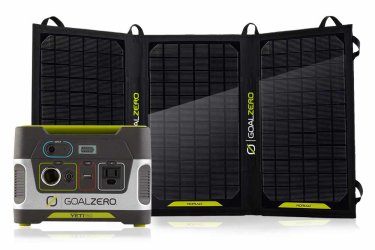
Goal Zero Yeti 150 Power Station
The Goal Zero Yeti 150, originally launched over a decade ago but still available in 2025 through resellers, serves as a compact 168Wh power station ideal for small-scale solar charging setups. Measuring 7.75 x 6.75 x 5.75 inches and weighing 12 pounds, it's designed for portability, though its lead-acid AGM battery makes it heavier than modern lithium-ion counterparts.
Performance
The Yeti 150 excels in low-power scenarios, providing 10-15 phone charges or 5-7 hours of laptop runtime. Solar input caps at 30W, making it efficient with small panels but slow for full recharges. Recent tests show it holds charge well for 6-12 months in storage, though battery life degrades after 500 cycles (about 3-5 years of moderate use).
Price: $200-250
Best For: Short trips
Pros
- Versatile ports for multi-device charging
- Silent, fume-free operation ideal for tents
- Compatible with Goal Zero's ecosystem for expansion
- Affordable for beginners
Cons
- Outdated lead-acid battery leads to faster degradation and heavier weight
- Limited to small loads; struggles with high-wattage devices
- No app connectivity or advanced monitoring
- Overpriced compared to lithium alternatives like EcoFlow River 3
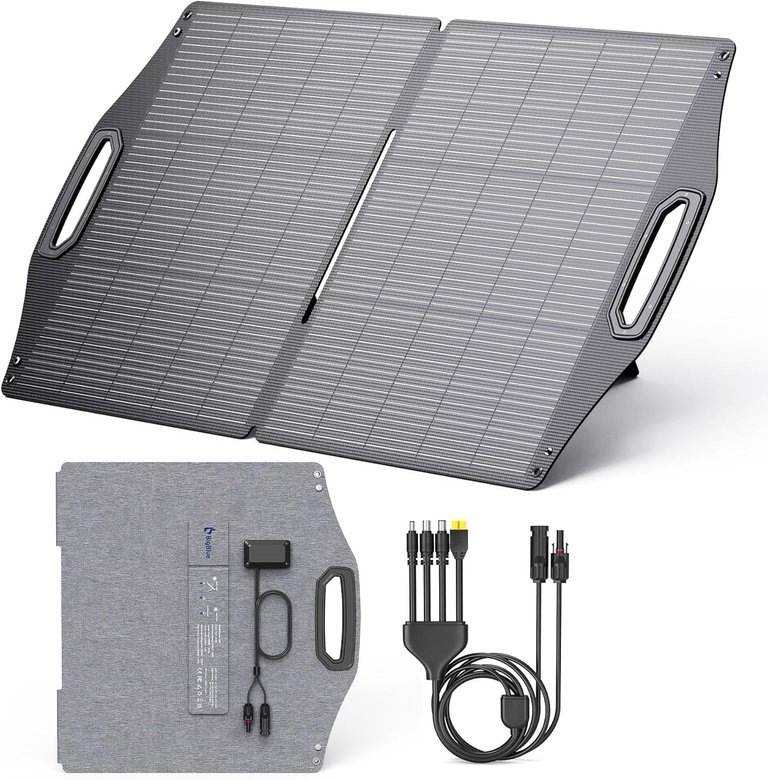
BigBlue SolarPowa 100 ETFE
The BigBlue SolarPowa 100 ETFE, updated in 2025 with N-Type TOPCon cells, is a 100W foldable panel excelling in value and durability. Unfolded at 42.5 x 25 x 0.98 inches and weighing 8.8 pounds, it folds to 24 x 21 x 1.2 inches for easy transport.
Performance
With 23% conversion, it generates 55-64W in direct sun, charging a 240Wh battery in 4 hours. In clouds, it outputs 12-20W, above average. ETFE coating ensures longevity, with IP68 rating for rain resistance.
Price: $170-200
Best For: Budget camping
Pros
- High efficiency in varied light
- Lightweight with kickstands for angling
- Multiple adapters included
- Affordable and durable
Cons
- No cable storage pouch
- Kickstands limit extreme angles
- Average in extreme cold
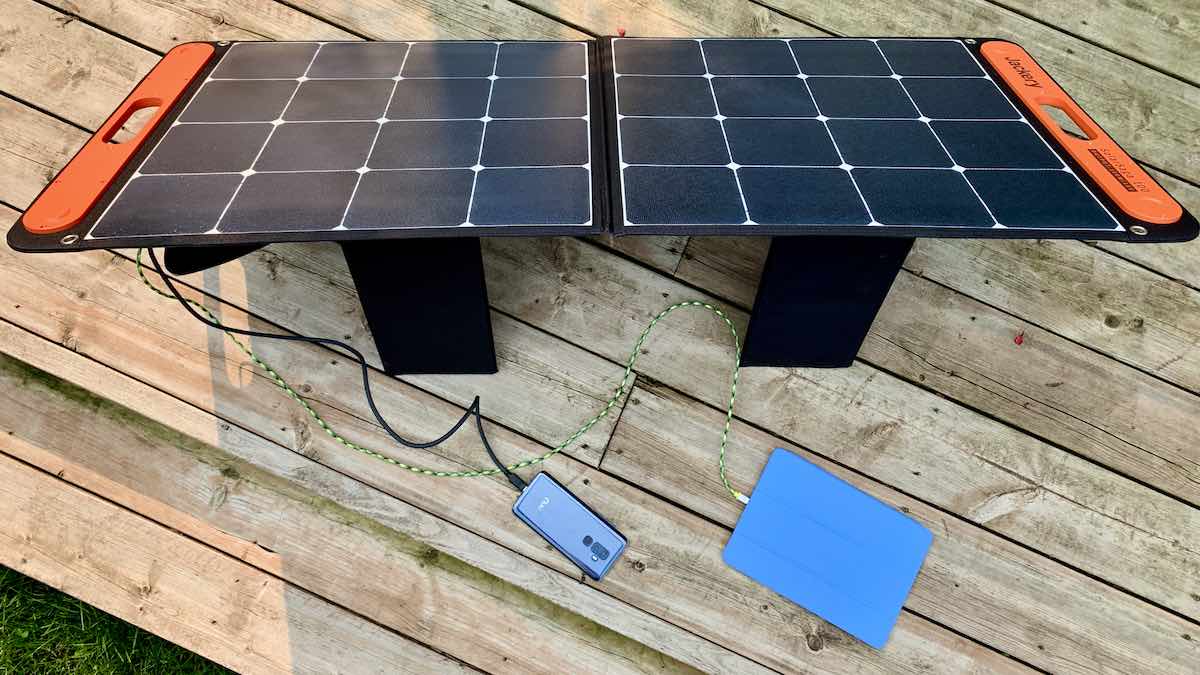
Jackery SolarSaga 100
Jackery's SolarSaga 100, refreshed in 2025 with bifacial tech, is a 100W panel with 23% efficiency. Folded at 24 x 21 x 1.6 inches (10.3 pounds), it unfolds to 48 x 21 x 0.2 inches.
Performance
Peaks at 100W in sun, charging stations in 4-5 hours; bifacial adds 25% from reflections. Solid in partial shade, with IP65 rating.
Price: $209
Best For: Versatile use
Pros
- Fast charging with dual USB
- Foldable with kickstands
- Versatile for stations
- Lightweight
Cons
- Proprietary connectors need adapters
- Not submersible
- Pricier than BigBlue
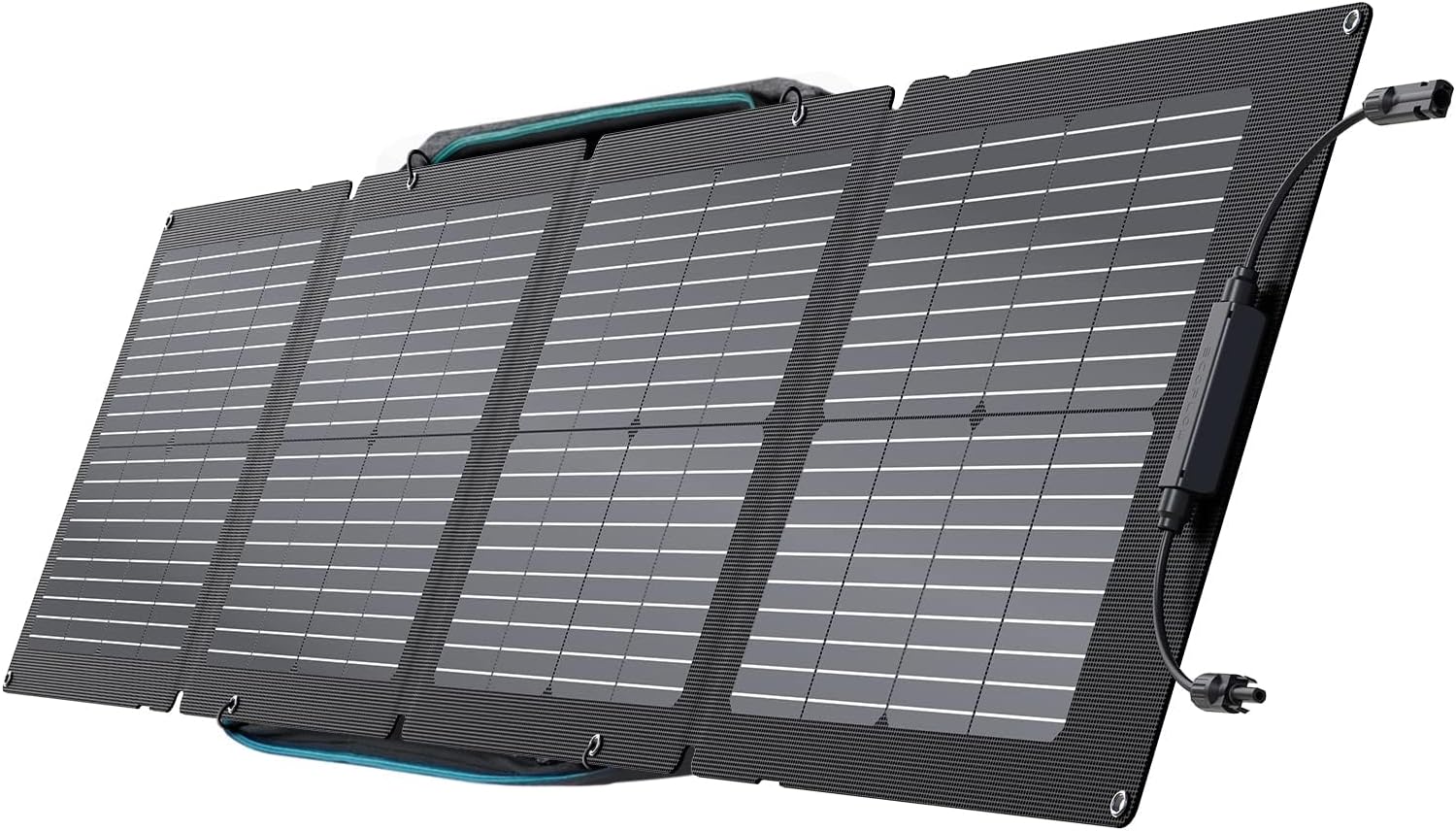
EcoFlow 110 Portable Solar Panel
EcoFlow's 110W panel, updated for 2025, features 21-22% efficiency in a foldable (16.5 x 20.2 x 0.8 inches, 8.8 pounds) design. MC4 outputs allow chaining; priced $299.
Performance
Outputs 50-90W in sun, efficient in clouds (51Wh/hour). IP68 for full weatherproofing.
Price: $299
Best For: All-weather
Pros
- High waterproofing
- Chainable for expansion
- Portable case-stand
- Versatile connectors
Cons
- Stand unstable
- Higher price
- No USB direct
Additional Eco-Friendly Reviews
More sustainable solar charging options for travelers and campers
BigBlue SolarPowa 28
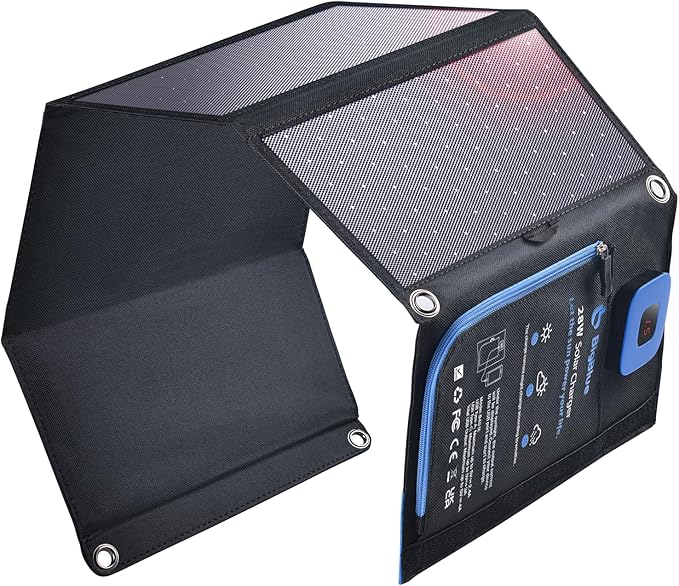
Wattage: 28W
Efficiency: 24%
Weight: 1.4 lbs
Price: $70
Best For: Hiking
BioLite SolarPanel 5+
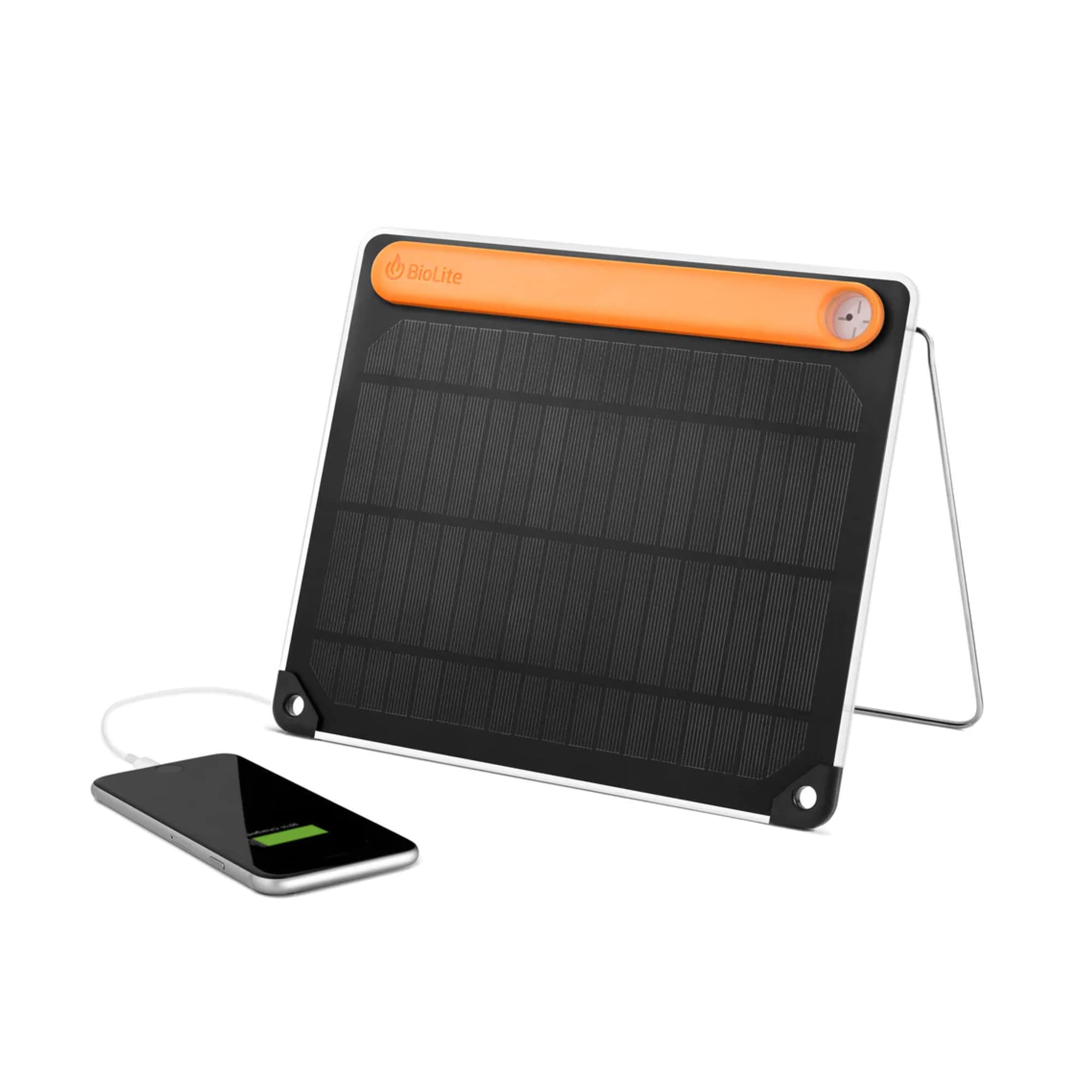
Wattage: 5W
Efficiency: High
Weight: 0.6 lbs
Price: $91
Best For: Ultralight
Monster SOLARA
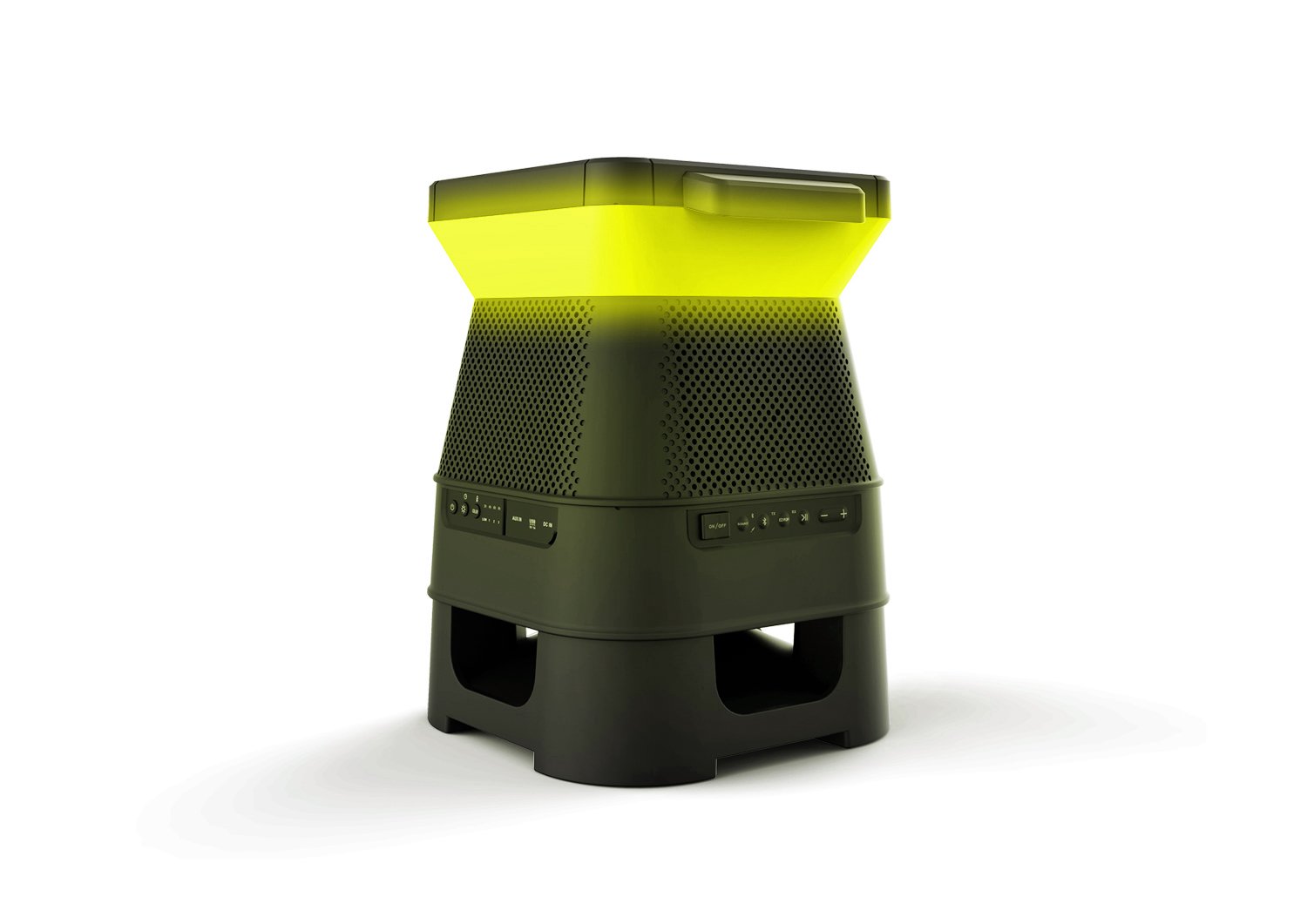
Wattage: 20W
Efficiency: N/A
Weight: ~5 lbs
Price: $150
Best For: Audio
GoSun Chill
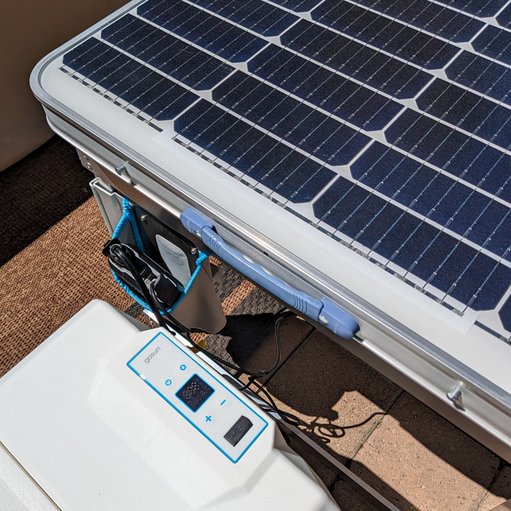
Wattage: 40L
Efficiency: N/A
Weight: 35 lbs
Price: $645
Best For: Cooling
Eco-Friendly Model Comparison
Compare specifications across different sustainable solar charging devices for travelers
| Model | Capacity/Wattage | Efficiency | Weight | Outputs | Waterproof | Price | Best For |
|---|---|---|---|---|---|---|---|
| Yeti 150 | 168Wh | N/A | 12 lbs | USB, 12V, AC | No | $200-250 | Short trips |
| BigBlue 100 | 100W | 23% | 8.8 lbs | MC4, USB | IP68 | $170-200 | Budget camping |
| Jackery 100 | 100W | 23% | 9.1 lbs | USB-A/C, DC | IP65 | $209 | Versatile use |
| EcoFlow 110 | 110W | 21-22% | 8.8 lbs | MC4 | IP68 | $299 | All-weather |
| BigBlue 28 | 28W | 24% | 1.4 lbs | 3 USB-A | IP65 | $70 | Hiking |
| BioLite 5+ | 5W | High | 0.6 lbs | USB-A | Splash | $91 | Ultralight |
| Monster SOLARA | 20W | N/A | ~5 lbs | Bluetooth | IPX5 | $150 | Audio |
| GoSun Chill | 40L | N/A | 35 lbs | AC/DC/Solar | No | $645 | Cooling |
Final Verdict
Should travelers and campers invest in eco-friendly solar charging devices for 2025?
Ideal For
- Camping enthusiasts
- Hikers and backpackers
- Emergency preparedness
- Eco-conscious travelers
Not Ideal For
- Heavy power users
- Those needing instant high power
- Budget-constrained buyers for premium models
Alternatives
Consider integrated systems like BioLite for simplicity, or larger panels for extended off-grid use.
Frequently Asked Questions
Common questions about eco-friendly solar charging devices for travelers and campers